
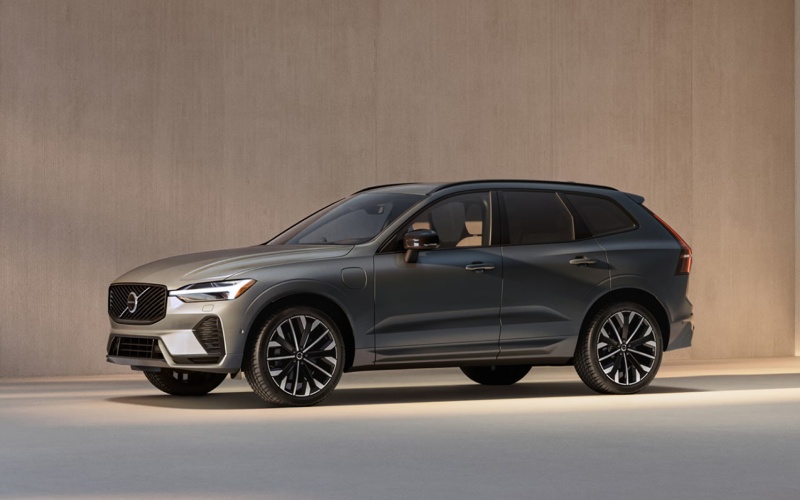
Patrick Volvo Cars - Which plug-in hybrid SUV accelerates quicker for daily drives around Mount Prospect, IL?
When performance is a priority, acceleration feels like the clearest metric. In a direct comparison of the Volvo and Mercedes-Benz plug-in hybrid midsize SUVs, the 2026 Volvo XC60 Plug-in Hybrid delivers a decisive edge in quickness. Its T8 AWD Plug-in Hybrid powertrain is rated at an estimated 455 hp with a 0-60 mph time of about 4.5 seconds, giving you immediate confidence when merging or clearing a short passing zone. The 2026 Mercedes-Benz GLC 350e counters with 313 hp and a quoted 0-60 mph of roughly 6.3 seconds. That is plenty brisk, but drivers who want the punchiest response will feel the Volvo’s advantage right away.
Of course, quickness is just one piece of the plug-in hybrid experience. The GLC 350e touts an impressive claimed electric range and the convenience of up to 60 kW DC fast charging, while the XC60 Plug-in Hybrid focuses on balanced daily use with an EPA-estimated 35 miles of electric driving and simple AC home charging that can take the battery from 0 to 100% in around five hours using a compatible wallbox. If you typically charge overnight at home and want instant-on power every time you press the accelerator, the XC60’s approach is a perfect match.
The numbers that matter on real roads
Speed limits vary and traffic ebbs and flows, but short on-ramps and tight passing windows are common. That is where the XC60 Plug-in Hybrid’s output shows up in a meaningful way: less time spent merging, more confidence when lanes are busy, and a natural reserve of power when a quick surge is needed. Standard AWD makes the most of that power in poor weather, too—helpful on wet or slushy Chicagoland mornings.
- Total output: XC60 Plug-in Hybrid estimated 455 hp vs. GLC 350e 313 hp
- 0-60 mph: XC60 Plug-in Hybrid about 4.5 seconds vs. GLC 350e about 6.3 seconds
- Traction: Both include standard AWD for year-round confidence
Beyond stats, the way each vehicle delivers power matters. The Volvo’s immediate electric torque blends with its gas engine for a seamless, linear surge. The Mercedes-Benz is smooth and refined, but its lower combined output translates into a more gradual buildup under heavy throttle.
How charging fits into performance ownership
Charging habits influence which PHEV feels right. The GLC 350e’s DC fast-charge capability is a clear advantage if you frequently rely on public stations and want short, mid-day top-ups. The XC60 Plug-in Hybrid, by contrast, is optimized for straightforward AC charging—ideal for a predictable home routine that resets your electric range nightly. If your lifestyle supports overnight charging, the Volvo’s approach is incredibly easy to live with, and you wake up each morning ready to handle around-town errands on electricity alone.
- Assess your daily mileage and whether home charging is available.
- Consider how often you need on-the-fly public charging versus overnight replenishment.
- Decide whether peak acceleration or maximum claimed EV range is your top priority.
Either way, both SUVs preserve long-trip versatility with gasoline power—eliminating range anxiety while still giving you extensive electric capability for local driving.
Driving feel and control
Chassis tuning shapes confidence as much as power. The XC60 Plug-in Hybrid feels composed and responsive, with clear steering and a settled ride. The Polestar Engineered variant turns up the athleticism further with specialized chassis upgrades. The GLC 350e brings a refined setup of its own, including 4MATIC all-wheel drive and standard self-leveling rear air suspension for steady load balance. Both feel upscale and solid; the Volvo’s stronger thrust simply gives it a more commanding personality when you ask for full power.
Technology also plays a role in the rhythm of daily driving. Google built-in on the XC60 Plug-in Hybrid integrates Google Assistant and Google Maps right in the 11.2-inch center display, streamlining voice control and navigation searches during busy commutes. The GLC 350e’s 3rd Generation MBUX system with “Hey, Mercedes” voice activation is similarly sophisticated, and it offers deep personalization features. Each system is powerful—your preference may come down to whether you want native Google apps or the MBUX ecosystem.
Frequently Asked Questions:
Does quicker acceleration make the XC60 Plug-in Hybrid less efficient?
No. The Volvo’s powertrain blends electric torque and efficient gas performance so you can enjoy brisk acceleration when needed while still taking advantage of an EPA-estimated electric range for local driving. How and where you drive will influence efficiency in either SUV.
How do AWD systems compare in winter?
Both SUVs include standard AWD—Volvo’s system and Mercedes-Benz 4MATIC—for all-weather traction. The differences you will feel more often day-to-day come from power delivery and tuning rather than basic traction capability.
For shoppers who want the strongest acceleration in this match-up, the 2026 Volvo XC60 Plug-in Hybrid is the clear winner on outright pace. It is also easy to integrate into daily life with simple AC charging and a cabin designed to reduce distraction. If you are mapping out test drives around town, set aside time to evaluate how each SUV feels in real traffic and on your usual routes. That is the best way to confirm which powertrain and tech interface suit your rhythm.
When you are ready to compare them side by side, Patrick Volvo Cars can help you build an XC60 Plug-in Hybrid that reflects your priorities, from audio to driver information to chassis tuning. Our team is proudly serving Mount Prospect, Rolling Meadows, and Oak Brook with guidance grounded in real-world driving, so you can choose confidently.
Request more 2026 Volvo XC60 Plug-in Hybrid information
Categories:
Volvo XC60 Plug-in Hybrid
 AdChoices